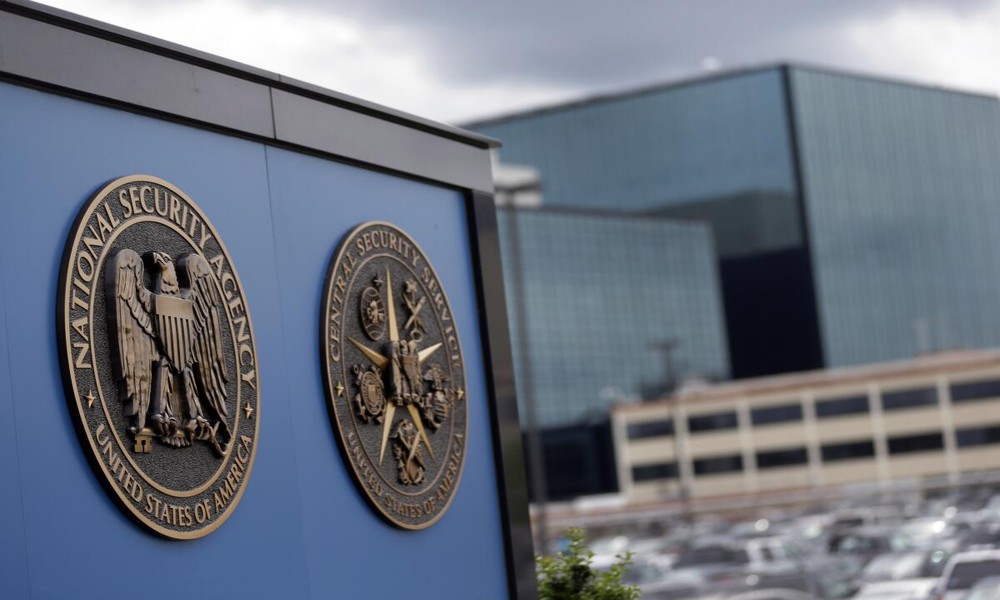

The Fort Meade corridor in Anne Arundel County concentrates more intelligence community and defense agency employment than almost any other geographic area in the country. The National Security Agency alone employs tens of thousands of civilian workers – cryptologists, engineers, analysts, IT specialists, linguists, and administrative staff – alongside a large contractor workforce that supports NSA’s mission. When employment disputes arise in this environment, the legal framework governing those disputes is not the standard federal employment system that most resources describe. If you’re an NSA or Fort Meade civilian facing discrimination, retaliation, or clearance problems, the starting point for anyone you consult – any Maryland federal employee attorney worth their time – should be an honest reckoning with how intelligence community employment changes what legal options actually exist.
The changes are significant, and some of them significantly narrow the remedies available. Understanding that clearly, before you make any move, is what keeps a difficult situation from becoming an unrecoverable one.
NSA’s Separate Personnel System and What It Means for MSPB Jurisdiction
The National Security Agency is an intelligence community element, and like other IC agencies, it does not operate under the standard Title 5 civil service personnel system in the same way that a civilian agency like the Social Security Administration or the Environmental Protection Agency does. NSA has statutory authority to establish its own personnel system under 50 U.S.C. § 3614, which gives the agency broad discretion over its workforce management.
The practical consequence of that separate personnel authority is that NSA civilian employees generally do not have Merit Systems Protection Board appeal rights in the same way that competitive service employees at most executive branch agencies do. The MSPB’s jurisdiction over adverse actions is grounded in Title 5 statutory rights – and where those rights don’t apply or are significantly modified by the agency’s enabling statute, the MSPB cannot hear the appeal. An NSA employee who receives a removal notice and immediately assumes they have a 30-day MSPB appeal right may be operating under a framework that simply does not govern their situation.
NSA has its own internal review processes for personnel actions, including internal grievance and appeal procedures that operate within the agency. Whether those processes provide any meaningful independent review – as opposed to internal reconsideration within the same institutional hierarchy – is a critical question that affects how an employment dispute should be approached from the beginning.
EEO Rights Survive Intelligence Community Employment – But With Important Constraints
The good news is that federal EEO rights under Title VII, the Rehabilitation Act, the ADEA, and related discrimination statutes do not disappear simply because an employee works at an intelligence agency. The prohibition on employment discrimination based on race, sex, national origin, age, disability, and other protected characteristics applies to NSA and Fort Meade civilian employees. The federal EEO complaint process – the 45-day counseling contact deadline, the formal complaint, the investigation, the hearing – is the applicable framework for those claims.
NSA operates its own EEO program, as required by EEOC regulations that apply to federal agencies including those with national security missions. An NSA employee who experiences race discrimination, disability-based adverse treatment, or harassment has the right to initiate the EEO complaint process with NSA’s Office of Equal Employment Opportunity and Diversity, and to pursue that complaint through the EEOC administrative process if it is not resolved.
The practical constraints at NSA are not in whether EEO rights exist but in how they operate in a classified environment. EEO proceedings at NSA involve handling sensitive information, classification review of evidence, and limitations on discovery that do not exist at civilian agencies. An employee’s EEO complaint may involve conduct or communications that are classified – and how those materials are handled in the investigation and hearing process is governed by rules that do not apply at unclassified agencies. Legal counsel who has experience navigating classified EEO proceedings at IC agencies is in a meaningfully different position from one who has only handled civilian agency cases.
The ICWPA vs. the WPA: Why Whistleblower Protections at NSA Are Different
Federal employees at the NSA who witness or are aware of fraud, waste, abuse, or violations of law face a specific and consequential challenge: the standard Whistleblower Protection Act that governs disclosures by most federal employees does not apply to intelligence community employees in the same way.
NSA employees who make protected disclosures are covered by the Intelligence Community Whistleblower Protection Act, not the WPA as administered by the Office of Special Counsel. The ICWPA establishes a separate framework for protected disclosures by intelligence community employees – one that is more restrictive in important respects and that channels disclosures through different procedures.
Under the ICWPA, protected disclosures to Congress must go through specific channels. An NSA employee who believes they have witnessed waste, fraud, or a legal violation cannot simply contact their Congressional representative directly in the manner that a civilian agency whistleblower might. The disclosure must be made to the NSA Inspector General first, or to the Intelligence Community Inspector General – and disclosures to Congress require going through the agency IG and following specific notification procedures. Bypassing those channels, even inadvertently, may result in a disclosure that does not receive ICWPA protection.
This procedural constraint has real consequences. IC employees who make disclosures through improper channels – believing they were acting lawfully – and who then face retaliation may find their whistleblower protection argument significantly weakened because the form of the disclosure did not comply with ICWPA requirements. Before making any disclosure of IC-related wrongdoing, understanding exactly which channels are protected and which are not is not a procedural formality. It is a threshold determination that affects whether any protection exists at all.
The Office of Special Counsel does not have jurisdiction over ICWPA retaliation claims the way it does for standard WPA claims. The enforcement mechanisms for ICWPA retaliation are channeled through the relevant Inspector General and through specific Congressional oversight processes – a framework that provides less independent enforcement leverage than the OSC/MSPB path available to non-IC whistleblowers.
Security Clearance Revocations at NSA: The Egan Doctrine Applies in Full Force
For NSA employees and Fort Meade civilians in classified positions, the security clearance is not just a job requirement – it is the practical condition of employment itself. A position that requires a Top Secret/Sensitive Compartmented Information clearance cannot be performed by someone whose clearance has been suspended or revoked, and that structural reality is what gives clearance revocations their career-ending character.
The Department of the Navy v. Egan (1988) Supreme Court decision limiting MSPB review of the merits of security clearance decisions applies with full force at NSA – and arguably with greater force than at civilian agencies, given NSA’s national security mission and the degree to which the Executive Branch’s clearance authority is grounded in constitutional responsibilities that courts consistently decline to second-guess.
When NSA issues a Statement of Reasons indicating a clearance will be revoked or denied, the employee has the right to respond and to request a hearing through NSA’s Personnel Security Appeals Board process. That process is internal to NSA – it is not the Defense Office of Hearings and Appeals process that applies to most DoD contractors and civilians at other defense agencies. The PSAB process has its own procedural rules, its own standards, and its own institutional character that reflects NSA’s mission-driven approach to personnel security.
The thirteen adjudicative guidelines – financial considerations, foreign influence, personal conduct, criminal history, psychological conditions, and others – apply in NSA clearance adjudications as they do across the intelligence community. But the weighting of those guidelines, the sensitivity to specific concern categories like foreign contacts, and the threshold for what constitutes an acceptable risk are calibrated differently at an agency whose mission is signals intelligence and whose workforce necessarily interacts with foreign information environments. An employee with foreign family contacts, prior foreign travel, or dual citizenship navigates a more complex clearance adjudication at NSA than at most other agencies.
The Intersection of Clearance Revocation and Discrimination Claims
As noted in other federal employment law contexts, the Egan doctrine limits the MSPB’s ability to review the merits of a clearance decision, but it does not entirely foreclose all legal challenge where a clearance revocation was demonstrably motivated by discriminatory or retaliatory intent. The legal framework for arguing that a clearance action was pretextual – that the stated security concern was not the actual reason for the revocation – is fact-specific and demanding, but it is not categorically unavailable.
At NSA, the institutional concentration of classified work means that a removal following clearance revocation is almost always insulated from the MSPB’s typical adverse action review. The discrimination or retaliation claim becomes the primary vehicle for any legal challenge, and building that claim requires establishing the connection between protected activity or a protected characteristic and the clearance action that preceded the removal – before the PSAB process concludes, if possible, and certainly before any relevant deadlines run.
Consulting a Maryland Federal Employee Attorney About NSA and Fort Meade Disputes
NSA and Fort Meade employment disputes require legal counsel who understands both the standard federal employment framework and the specific ways the intelligence community modifies that framework. The ICWPA’s disclosure channel restrictions, NSA’s separate personnel system, the PSAB clearance appeal process, and the classified environment in which EEO proceedings must operate are all areas where general federal employment law knowledge is necessary but not sufficient.
The Mundaca Law Firm represents federal employees throughout Maryland, including employees at Fort Meade installations who are navigating EEO complaints, whistleblower retaliation concerns, and clearance revocations. If you work in the intelligence community and are facing an employment dispute, contact the firm to schedule a consultation and get a clear assessment of which protections apply to your specific situation and what the realistic options are.