
You’ve tried the rice cakes. You’ve tried the celery sticks. And two hours later, you’re elbow-deep in a bag of chips wondering where it all went wrong.
The real problem isn’t your willpower — it’s your snacks. Most “diet-friendly” snacks are almost completely protein-free, which means they do nothing to control hunger hormones or keep your blood sugar steady.
Here’s the good news: swapping low-protein snacks for high protein alternatives is one of the most effective — and easiest — changes you can make for weight loss. This guide gives you exactly what to eat, why it works, and how to make it fit into your real life.
🔬 The Science: Protein triggers the release of fullness hormones (GLP-1 and PYY), slows digestion, and stabilizes blood sugar — all of which reduce overall calorie intake throughout the day. Studies consistently show high-protein diets lead to greater fat loss with less hunger.
Why Protein Is the Secret Weapon for Weight Loss
Not all calories are equal — and not all macros affect your hunger the same way. Protein is the most satiating of the three macronutrients. Here’s why it wins for weight loss:
- It curbs cravings: Protein reduces levels of ghrelin, the “hunger hormone,” keeping you from reaching for junk food.
- It burns more during digestion: The thermic effect of protein is 20–30%, meaning your body uses more energy just to process it.
- It protects muscle: When losing weight, eating enough protein prevents muscle breakdown, keeping your metabolism high.
- It stabilizes blood sugar: No spikes, no crashes, no afternoon slumps.
The goal? Aim for 15–25g of protein per snack to meaningfully impact hunger. Anything under 5g is basically a carb snack wearing a protein costume.
Top High Protein Snacks for Weight Loss (With Calories)
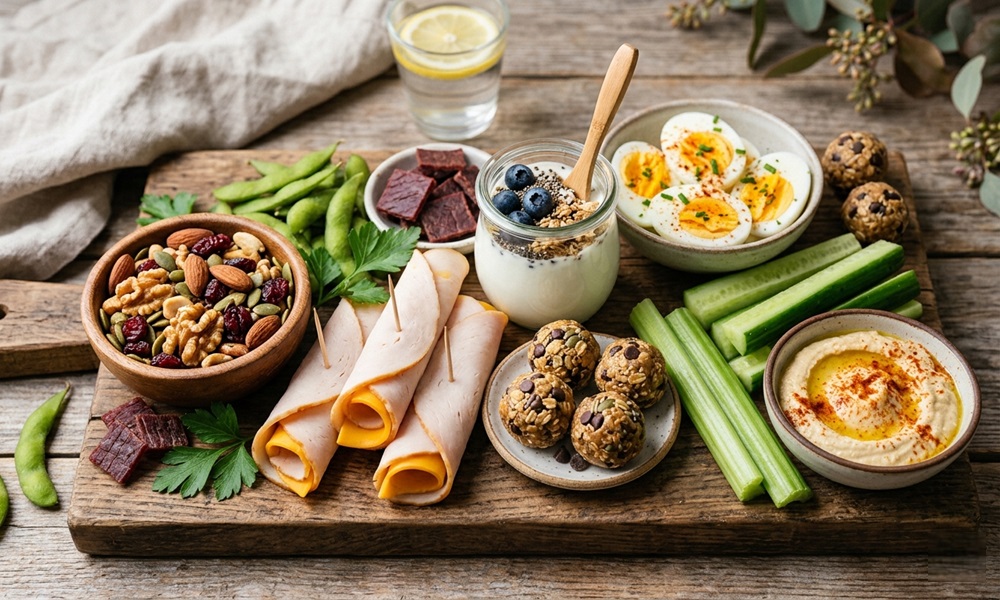
Below are the best high protein, low calorie snacks you can realistically eat every day — not just when you’re feeling disciplined.
The Full Comparison Table
| Snack | Calories | Protein | Satiety Rating | Prep Needed? |
|---|---|---|---|---|
| Cottage Cheese (1 cup) | 180 | 25g | ⭐⭐⭐⭐⭐ | No |
| Greek Yogurt, plain (1 cup) | 100 | 17–20g | ⭐⭐⭐⭐ | No |
| Hard-Boiled Eggs (2) | 156 | 12g | ⭐⭐⭐⭐ | Minimal |
| Edamame (1 cup) | 188 | 17g | ⭐⭐⭐ | Minimal |
| Tuna + Rice Cake | 160 | 20g | ⭐⭐⭐⭐ | Minimal |
| Beef/Turkey Jerky (1.5 oz) | 120 | 14g | ⭐⭐⭐ | No |
| String Cheese (2 sticks) | 160 | 14g | ⭐⭐⭐ | No |
| Roasted Chickpeas (½ cup) | 130 | 7g | ⭐⭐ | No |
High Protein Snacks by Goal and Situation
Best for Post-Workout Recovery
After a workout, your muscles need protein fast. These deliver the most protein with minimal fuss:
- Greek yogurt with berries — fast-absorbing protein, antioxidants for recovery
- Chocolate milk (low-fat) — the ideal 3:1 carb-to-protein ratio for muscle repair
- Cottage cheese with fruit — casein protein for slow, sustained amino acid release
Best for Busy Professionals (No Prep, No Fridge)
These are shelf-stable, portable, and require zero preparation:
- Jerky or meat sticks — look for low-sodium options
- Single-serve nut butter packets with rice cakes
- Protein bars — choose ones with 15g+ protein and under 10g sugar
- Roasted pumpkin seeds — 8g protein per ounce, surprisingly filling
Best Plant-Based High Protein Snacks
- Edamame — the most complete plant protein source available as a snack
- Roasted chickpeas — crunchy, satisfying, and fiber-rich
- Pumpkin seeds (pepitas) — high in protein and magnesium
- Tempeh slices — 15g protein per serving, pairs well with hummus
Pros & Cons of High Protein Snacking for Weight Loss
Pros
- Reduces overall daily calorie intake naturally
- Keeps blood sugar stable (no energy crashes)
- Preserves lean muscle while losing fat
- Most options are quick and portable
- Works with most diets (keto, paleo, vegan)
Cons
- Some high-protein options are expensive
- Processed protein bars can contain high sugar
- Animal-based options aren’t for everyone
- Overdoing protein isn’t helpful — aim for balance
What to Avoid: Sneaky “Protein” Snacks That Aren’t
The food industry loves slapping “protein” on products that barely qualify. Watch out for these common traps:
- Protein granola bars under 8g protein — mostly oats and sugar with a protein afterthought
- Flavored yogurts with fruit on the bottom — often 20g+ sugar and much lower protein than plain Greek yogurt
- “High protein” cereals — unless it’s 15g+ per serving, it’s still mostly carbs
- Trail mix with lots of dried fruit — calorie-dense with a low protein-to-calorie ratio
The rule of thumb: A snack earns the “high protein” label if it delivers at least 10g of protein per 200 calories. Anything less is just… a snack.
Key Takeaways
- Aim for 15–25g of protein per snack for meaningful hunger control.
- Cottage cheese, Greek yogurt, and eggs offer the best protein per calorie.
- Always check the label — many “protein” snacks are mostly sugar and carbs.
- Plant-based options like edamame and roasted chickpeas work great for vegetarians.
- For on-the-go needs, jerky and nut butter packets require zero prep or refrigeration.
- Timing matters: a protein-rich snack 2–3 hours before a meal reduces how much you eat at that meal.